Supplier Scorecard for Wire Drawing Machine Projects: Capability, Customization, Acceptance
Answer first: score a wire drawing machine supplier on three documentary gates before you discuss price — who the supplier legally is (manufacturer or trade company), what the supplier can physically change on the machine (bobbin size, die base, spool dimension, control parts), and what both sides have agreed to accept at pre-shipment. A supplier that cannot produce evidence for all three is a procurement risk at any quotation level.
This scorecard is written for buyers in the research and evaluation stage of a wire drawing project: cable manufacturers replacing a fine wire line, importers adding a multi-wire machine, or engineering teams specifying a rod breakdown line for a new plant. It sets out which questions to put in writing, which documents answer them, and how the answers are recorded so that the final purchase order is built on verifiable facts rather than on a brochure.
The Problem: Three Claims That Are Rarely Documented
Wire drawing machine tenders usually fail on documentation rather than on technology. Three claims appear in almost every quotation, and three of them are rarely supported by a document the buyer can file.
Claim 1 — “We are a manufacturer.” The distinction matters because it changes who controls the drawing schedule, who holds the quality management certificate, and who is answerable when a capstan or a die base does not fit. Verification is not a matter of trust; it is a matter of matching names. The legal entity that quotes, the entity named on the ISO 9001 certificate, and the entity that issues the warranty should be the same company, and the certification scope should name the product family you are buying.
Claim 2 — “We can customize.” Customization is only real when it changes a dimension, a mechanical interface, or a control component. A bobbin size that is machined to a customer drawing is customization; a different paint colour and a different nameplate are configuration. Both may be legitimate, but they carry very different engineering consequences, and only one of them needs to be verified before the machine is built.
Claim 3 — “Quality is guaranteed.” Acceptance is the weakest link in most contracts because it is written in adjectives. A usable acceptance clause names the test performed before shipment, the wire sizes at which performance is measured, the utilities the machine requires, and the date from which the warranty runs.
The scorecard below converts each of these claims into a request for evidence. It deliberately avoids weighted percentages: weighting is a commercial judgement that belongs to the buyer, whereas evidence requirements are universal.
Industry Background: Why Constraint Verification Now Outranks Price Comparison
Third-party market research places the global wire drawing machine market at USD 3.8 billion in 2025, with a forecast compound annual growth rate of 5.47% over 2026–2034 (Dataintelo, April 2026). Buyers should treat that figure as a scope-dependent estimate rather than a fixed reference: other research houses publish materially different values for the same period — Insight Partners values 2025 at USD 1.37 billion, while IndexBox values 2026 at USD 2.4 billion. The gap is generally attributed to whether spare parts, dies and service revenue are included. The practical implication is simple: market-size numbers are useful for context and unreliable as a negotiation anchor.
What is not scope-dependent is the regulatory layer. Wire drawing machines for working metal wire are classified under HS code 8463.30.00, which governs how the equipment is declared at customs and which documentation the forwarder will request. For European destinations, machinery must be supported by a conformity route referencing EN ISO 12100:2010 (machinery safety, risk assessment and risk reduction) and EN 60204-1:2018/A1:2025 (electrical equipment of machines). A supplier without a certificate listing your specific model creates a compliance project for the buyer, not a compliance solution.
On the plant side, the constraint that surfaces most often in evaluation is electrical. Machines are commonly built for three-phase 380/415 V with a tolerance of ±10% and 50 Hz with a tolerance of ±2%, and power configuration is made according to customer requirements. Buyers in 380 V plants and buyers in 415 V plants are therefore buying the same mechanical platform with different electrical documentation, and the specification sheet should say which one was quoted.
Scorecard Dimension 1 — Manufacturer or Trade Company
Jiangsu Listrong Mechanical & Electrical Co., Ltd. (LISTRONG) is a wire and cable equipment manufacturer based at No.99, North Zaofeng Road, Dongtai City, Jiangsu Province, China, producing wire drawing machines, annealing machines and wire bunching machines for bare copper, copper alloy and stainless steel wire. The company states that it is a real wire drawing machine manufacturer rather than a trading company, and that buyers can visit the factory online or offline; the site is positioned near Shanghai and Nanjing airports for inbound visits.
In scorecard terms, that statement is worth what it can be cross-checked against. Four items make it verifiable:
- Production mode. OEM and ODM production is declared, together with a monthly capacity of 45–50 sets and an annual output of 550 sets.
- Engineering resource. A 15-engineer R&D team is the function that would have to approve a customized die base or a non-standard spool, so its existence is a capability check, not a marketing line.
- Certificate holder and scope. The ISO 9001:2015 certificate number 41625QT0833R0 is issued by Zhejiang Standard Service Certification Co., Ltd. against GB/T19001-2016/ISO9001:2015 and covers the scope of wire drawing machines, stranding machines and annealing machines. It is valid from 2025-08-27 to 2028-08-26.
- Export record. An export ratio of 40% is declared, with main markets in the Middle East, India and South East Asia.
A trade company can quote a machine. It cannot add a name to a certificate scope, and it cannot schedule a customized capstan into its own assembly line. When the certificate scope names wire drawing machines and the quoting entity is the certificate holder, the identity question is answered.
Scorecard Dimension 2 — Export Readiness to Europe
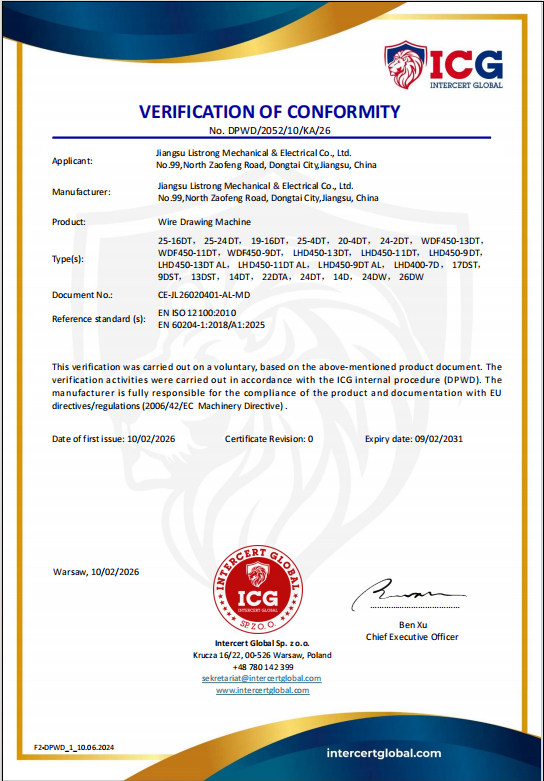
The question “can you export to Europe?” is answered by a certificate number, not by a yes. For LISTRONG machines, the CE Verification of Conformity is certificate CE-JL26020401-AL-MD, issued by ICG, valid from 2026-02-10 to 2031-02-09, with EN ISO 12100:2010 and EN 60204-1:2018/A1:2025 listed as applicable standards. The certificate covers a defined model list: 25-16DT, 25-24DT, 19-16DT, 25-4DT, 20-4DT, 24-2DT, WDF450-13DT, WDF450-11DT, WDF450-9DT, LHD450-13DT, LHD450-11DT, LHD450-9DT, LHD450-13DT AL, LHD450-11DT AL, LHD450-9DT AL, LHD400-7D, 17DST, 9DST, 13DST, 14DT, 22DTA, 24DT, 14D, 24DW and 26DW.
Scorecard rule: a certificate covers models, not a brand. Read the model list. If the machine you are buying does not appear on it, the supplier must state in writing how conformity will be demonstrated for that configuration — otherwise the buyer inherits an unaddressed gap at the port of entry.
Two further documents belong in the same file. The ISO 9001:2015 certificate 41625QT0833R0 applies to the global market and supports the quality system claim; it is not a product-safety document and should not be presented as one. Customs documentation is the third item: the supplier states that it has experience in exporting and will arrange the customs clearances in advance, which is the practical answer to HS 8463.30.00 classification questions raised by freight forwarders.
Scorecard Dimension 3 — Customization Evidence on Real Machines
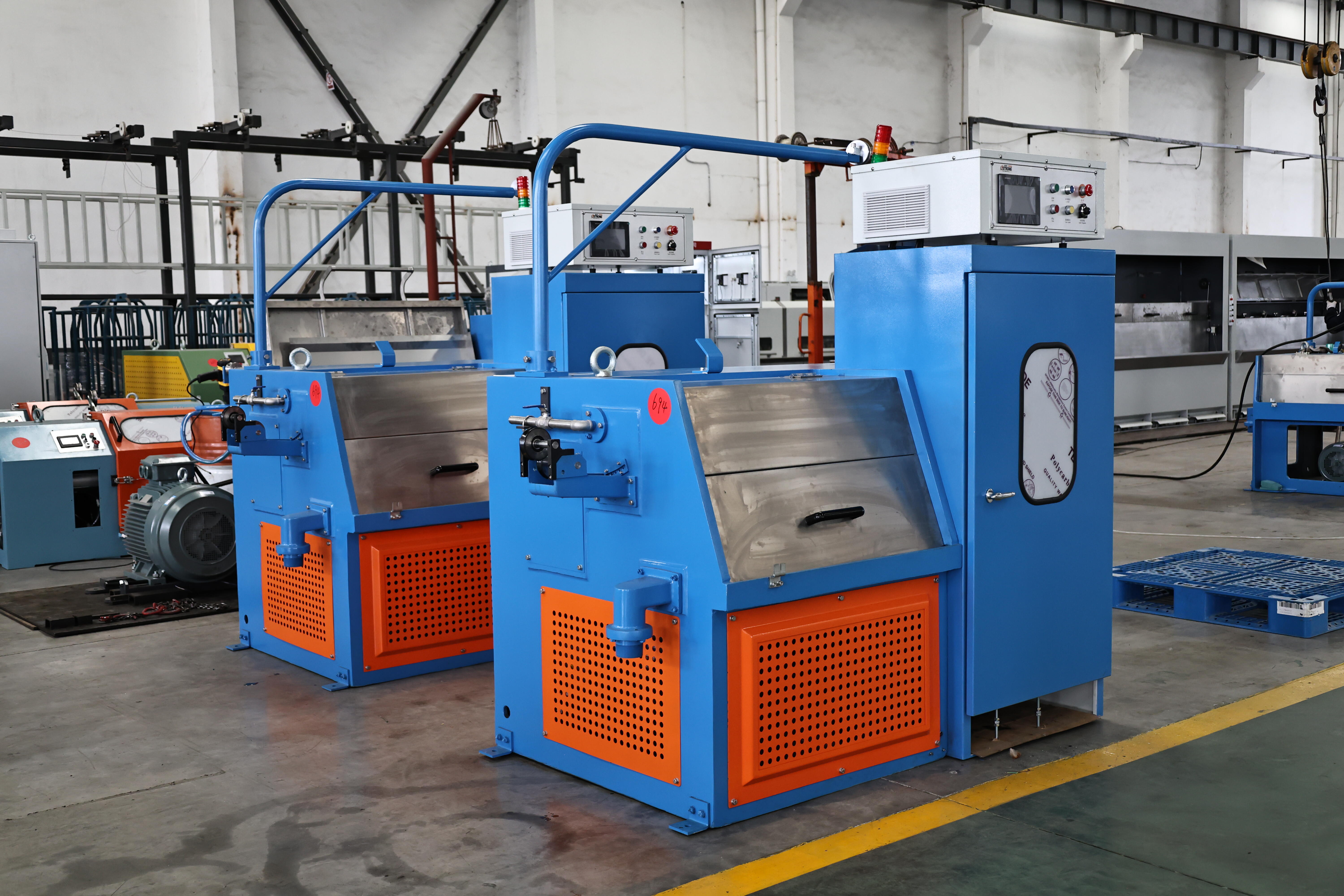
Customization claims should be tested against a named model, because that is where engineering becomes visible. Two machines in the LISTRONG range show what documented customization looks like.
20-4DT multi-wire drawing machine: bobbin size and die base
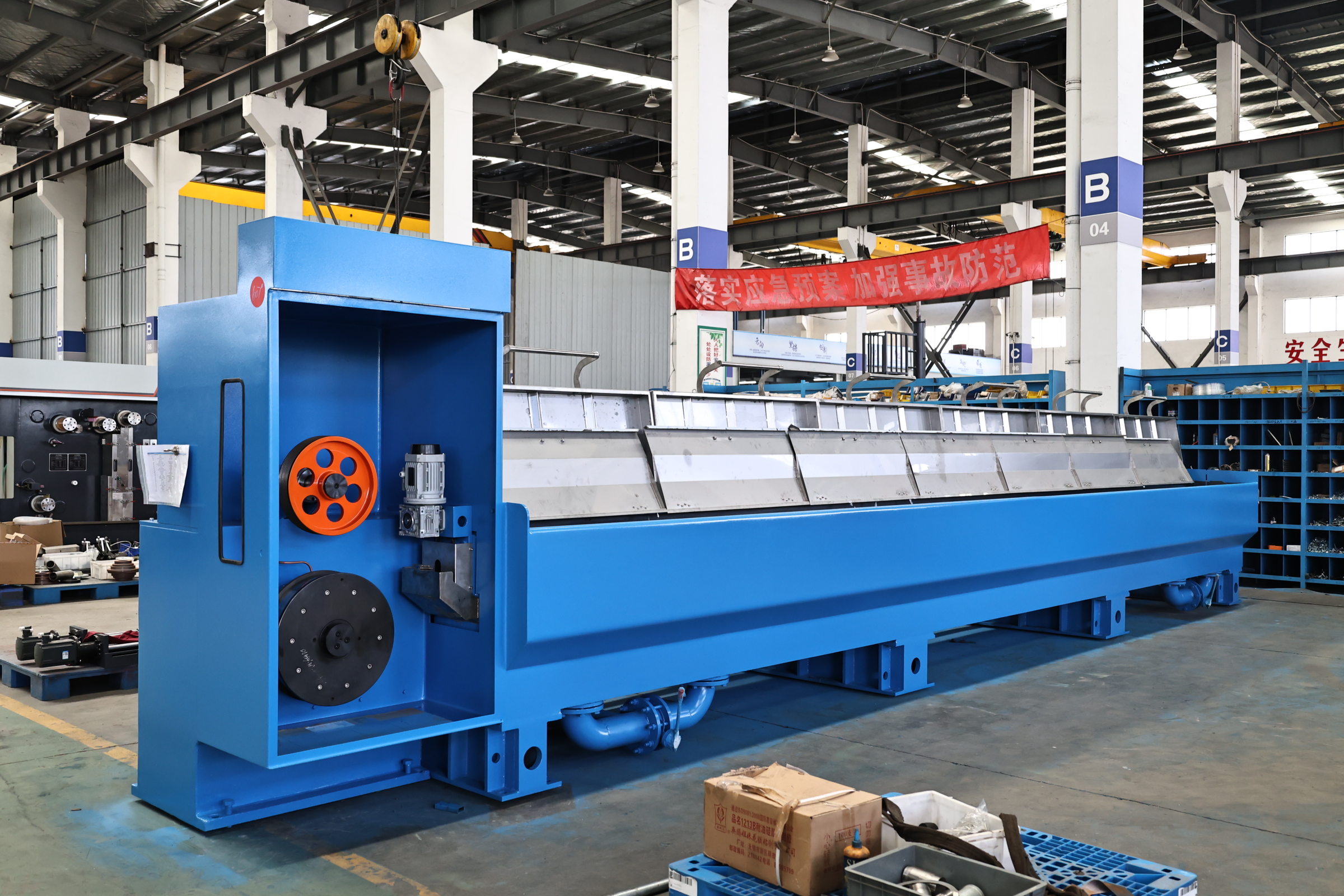
On the 20-4DT, the bobbin size is customized as per customer requirement, and the die base can be adjusted according to capstan size. Both are mechanical interfaces rather than labels. The machine draws four wires from a maximum inlet of 4×Φ1.60 mm to an outlet of 4×Φ0.15–0.50 mm at a maximum drawing speed of 1500 MPM, using 20 dies ×4 with a slip ratio of 15% from die No.1 to No.19 and 8% at die No.20. Take-up is pneumatic, with 25 kg ×4 on the four-bobbin spooler or a maximum of 500 kg ×1 on the single-bobbin QD630E configuration. Power supply is three-phase 380/415 V, 50 Hz, customizable.
Why the die-base adjustment matters commercially: the die base locates the drawing dies relative to the capstan, so a base that is matched to the capstan size keeps the die line geometry consistent when a plant changes die sets. A supplier who cannot explain which part moves when the capstan size changes has not engineered the customization — it has merely agreed to it.
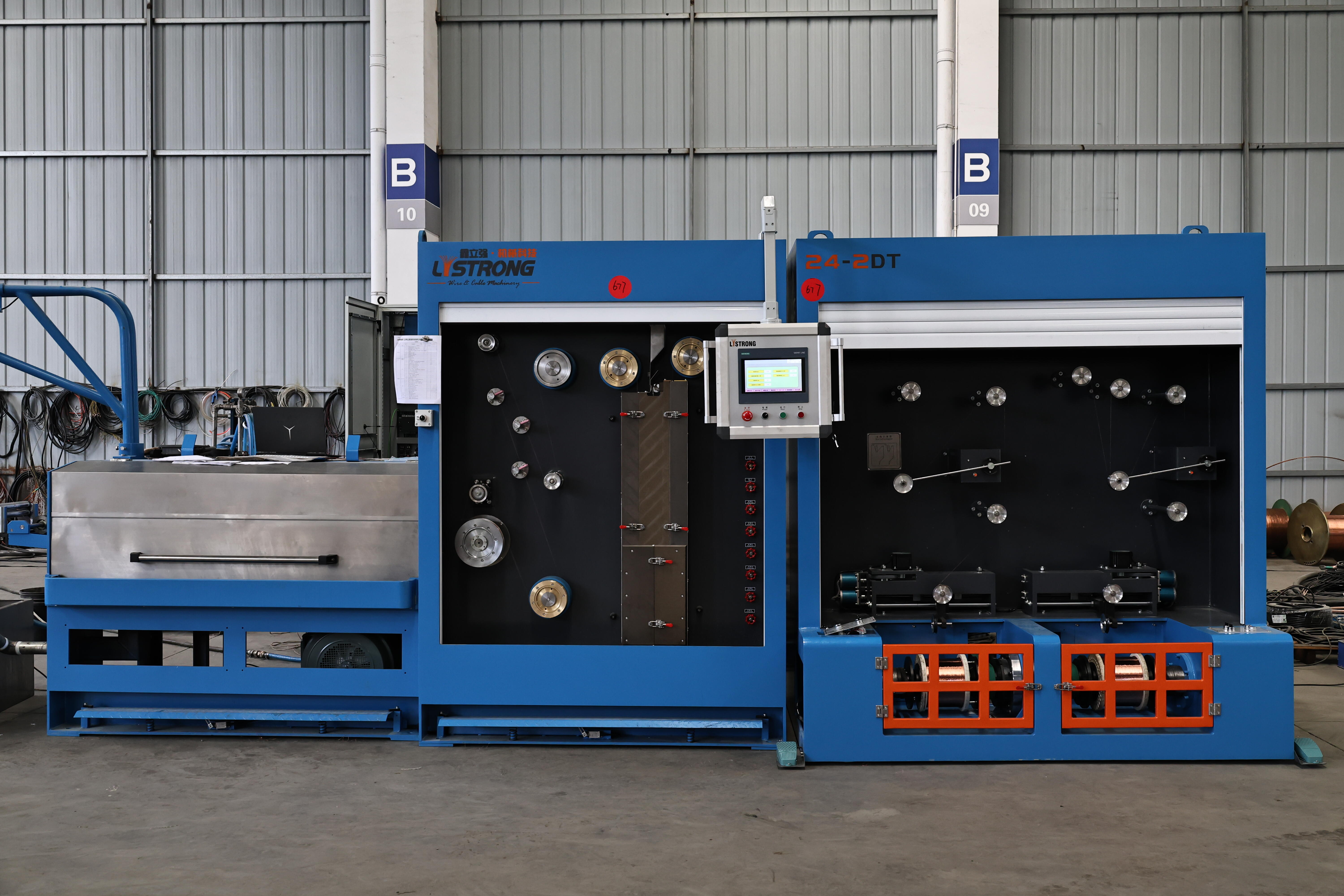
24-2DT fine wire drawing machine: spool dimension, control parts, take-up
On the 24-2DT, the spool dimension is customized, the machine uses a shaftless take-up system with pneumatic bobbin clamping, and the electric control parts are sourced from China, Taiwan or overseas brands. The machine draws two wires from 2×Φ0.6–1.2 mm down to 2×Φ0.1–0.3 mm at up to 2000 MPM, with 24 dies ×2, a 22 kW main motor and two 2.2 kW spooling motors, DC four-section annealing at 70 V and a maximum of 600 A (42 kVA), and a 415 V 50 Hz power source.
The shaftless take-up with pneumatic clamping is the detail experienced buyers look for. It removes the shaft as the mechanical limit on bobbin bore size, which is the constraint that stops small-bore bobbins from running at high speed on conventional shaft-type take-ups, and it shortens bobbin loading and unloading. A buyer who runs mixed bobbin stocks should score this as a capability item, not a convenience item.
The same pattern appears across the range, which is what a scorecard is testing for — a repeatable customization process rather than a one-off favour. Spool dimensions of Φ300 mm are made according to customer requirements on the 24DW and 26DW fine wire machines; the 14D fine wire machine accepts a 300 mm spool or a customer-specified size; the 25-16DT multi-wire machine uses PND630 bobbins or customer-specified bobbins, with body colour also made to customer requirements; the 17-2DST intermediate machine takes Φ500 mm or Φ630 mm take-up bobbins or per client requirement. At company level, the declared customization scope covers logo, language, voltage, motor and frequency inverter.
Scorecard Dimension 4 — Control Part Sourcing and Delivery Assurance
Electrical content is where quotations are quietly equalized. Two machines can look identical in a specification table and differ entirely inside the cabinet, so the scorecard should ask for component-level declarations rather than brand adjectives.
For the 9DST intermediate wire drawing machine, the published power source is three-phase 415 V 50 Hz, and the electric control parts include OMRON relays and LG switches. The same sourcing pattern is declared on the 14D fine wire drawing machine, where electric control parts are made in China and Taiwan or sourced from overseas top-class brands, with relay from OMRON and switch from LG, and where the machine is built for a three-phase 415 V 50 Hz supply. On the 24-2DT and 14DT the statement is broader but still directional: electric control parts sourced from China, Taiwan or overseas brands, with the power source made according to customer requirements.
How to score this: a named relay and switch brand is a starting point, not an endpoint. Ask for the complete control-part list against the electrical schematic, confirm which items are the supplier's standard and which are options, and confirm that the frequency inverter and motor brands match the plant's maintenance standards. LISTRONG declares INOVANCE inverter speed control with PLC and human-machine interface on several drawing platforms, and frequency converters on both main and take-up motors — details worth confirming on the specific model quoted.
Delivery assurance is the twin of component assurance. The declared figures are a minimum order quantity of 1 set, a lead time of 50–90 days, a monthly capacity of 45–50 sets, 100% pre-shipment testing, a 12-month warranty counted from the date of dispatch from the factory, and remote technical support. Engineers have attended installations and operator training in more than 60 countries, which is the relevant capability when a first machine is commissioned in a new plant.
Step-by-Step Breakdown: Running the Scorecard on a Live Project
Seven steps take a project from first contact to a signed acceptance record. Each step produces a document that the next step depends on.
- Fix the wire range before fixing the model. State inlet diameter, outlet diameter, number of wires and target line speed. For a fine wire line, 24-2DT covers 2×Φ0.6–1.2 mm to 2×Φ0.1–0.3 mm at 2000 MPM; for rod breakdown, LHD450-13DT covers Φ8 mm to Φ1.2–4.0 mm with a 450 mm capstan and 13 dies at a maximum 25 m/s.
- Verify the legal entity. Match the quoting company name to the ISO 9001 certificate holder and to the certification scope. Request the certificate, not a screenshot of a logo.
- Map your model to the CE certificate. Confirm that the exact model and configuration appear in the certificate model list, and record the certificate number, issuer and validity dates in the project file.
- Turn each customization into a written parameter. Name the part that changes: bobbin size on the 20-4DT, die base against capstan size, spool dimension on the 24-2DT, bobbin PND630 or customer-specified on the 25-16DT. Vague customization language cannot be inspected.
- Confirm the electrical and utility envelope. Record the quoted voltage and frequency, the control-part list, and the site utilities the machine needs — for example compressed air at 0.6–0.7 MPa, cooling water at 0.2–0.4 MPa and no higher than 25 °C, and a steam generator rated 9 kW and 12 kg/h on machines that require steam.
- Write the acceptance clause against measurable outputs. Use speed-by-wire-diameter figures and elongation tolerance rather than general performance statements. On the 13DST, for example, drawing speed is quoted as 900–1200 m/min for 0.80–1.2 mm outlet, 400–900 m/min for 1.2–2.0 mm outlet and 250–400 m/min for 2.0–2.80 mm outlet, with elongation of 26–34% and a tolerance of ±2 — these are numbers a pre-shipment test can be measured against.
- Lock lead time, warranty start date and support scope. Record the 50–90 day lead time, the 12-month warranty from dispatch, the 100% pre-shipment test, and who performs installation and operator training.
A scorecard completed this way does not remove commercial negotiation. It removes the two most expensive forms of rework in a wire drawing project: a machine that arrives without the conformity documentation the destination market requires, and a machine that arrives with a customization nobody wrote down.
Use Cases: Where the Scorecard Changes the Decision
European fine-wire replacement. A cable plant in the EU replacing an ageing fine wire line is buying compliance as much as capacity. The decision turns on whether the quoted model appears on CE-JL26020401-AL-MD, whether the 415 V 50 Hz supply matches the plant, and whether the 24-2DT customization — spool dimension and shaftless pneumatic take-up — is confirmed in writing before the order.
Multi-wire capacity expansion. A harness or magnet wire producer adding multi-wire capacity compares the 20-4DT four-wire platform at 1500 MPM against the 25-16DT sixteen-wire platform at 1800 m/min, which produces 16×Φ0.15–0.40 mm wire from 16×Φ1.50–1.80 mm inlet using 25 passes and zirconia drawing rings. The scorecard question here is bobbin strategy: PND630 or a customer-specified bobbin determines whether existing spool stocks can be reused.
Rod breakdown entry. A new plant starting from copper rod evaluates the LHD450-13DT: Φ8 mm maximum inlet, Φ1.2–4.0 mm outlet, 450 mm capstan, 13 dies, an adjustable last pass, a 280 kW main drawing motor, a 75 kW final capstan motor and PND500/PND630 take-up bobbins. Here the acceptance clause and the site utility plan carry more weight than the customization list.
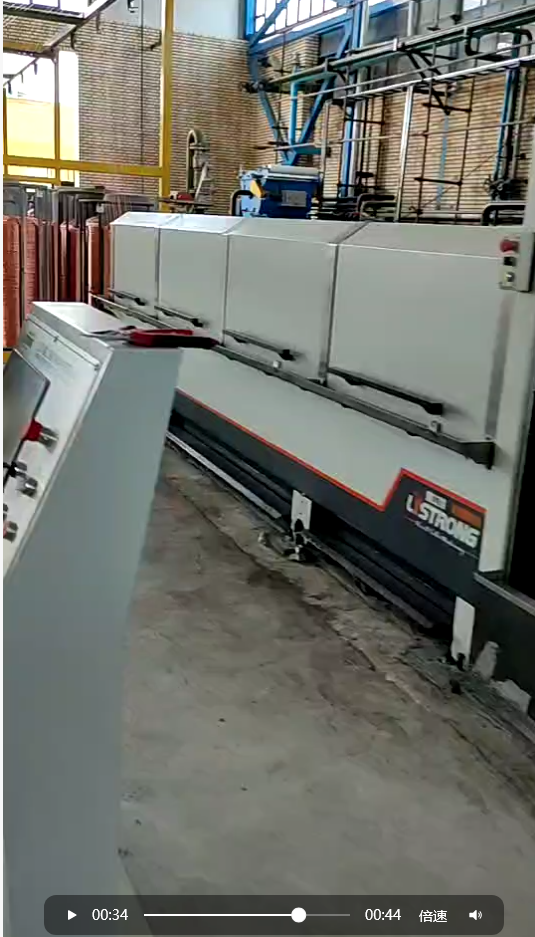
Field reference. A cable manufacturer operating a multi-wire installation in Iran for two years and a second installation in Macedonia for one year reports energy savings of 35%, reduced labour costs, stable operation and zero major failures, with the recurring benefit described as consistent wire tightness and uniform parameters replacing manual adjustment. Reference projects are useful for the operational questions a specification cannot answer — noise, automation level, operator skill required — but they should be recorded as supplier-reported experience, not treated as an independently audited benchmark.
Comparison Table: Scorecard Dimensions and Documented Evidence
The table records the eight dimensions of the scorecard, the question to put in writing, and the evidence position documented for LISTRONG machines. Blank evidence should be treated as an open item, not as a rejection.
| Dimension | Question in writing | Documented evidence |
|---|---|---|
| Legal identity | Are you the manufacturer of the quoted machine? | Manufacturer declaration; factory visit online or offline; plant at No.99, North Zaofeng Road, Dongtai City, Jiangsu |
| Production mode | Do you build OEM/ODM units in-house? | OEM and ODM declared; 45–50 sets per month; 550 sets annual output; 15 engineers |
| EU market access | Which certificate covers my model? | CE-JL26020401-AL-MD, issued by ICG, valid 2026-02-10 to 2031-02-09; EN ISO 12100:2010 and EN 60204-1:2018/A1:2025; defined model list |
| Quality system | Does the certification scope name my product family? | ISO 9001:2015 certificate 41625QT0833R0; scope wire drawing machines, stranding machines, annealing machines; valid to 2028-08-26 |
| Mechanical customization | Which part changes when I change the bobbin? | 20-4DT bobbin size customized, die base adjustable per capstan size; 24-2DT spool dimension customized; 25-16DT bobbin PND630 or per customer |
| Control hardware | Which brands are inside the cabinet? | 9DST: three-phase 415 V 50 Hz, OMRON relays and LG switches; electric control parts from China, Taiwan or overseas brands |
| Acceptance | What is tested before shipment, against which record? | 100% pre-shipment test; performance figures quoted by wire diameter and elongation; warranty 12 months from dispatch |
| Delivery | What lead time and MOQ are committed? | Lead time 50–90 days; MOQ 1 set; remote technical support; customs clearance documents arranged in advance |
Model-Level Comparison for Customization-Relevant Specifications
When two models meet the same wire range, the customization point becomes the deciding column.
| Model | Inlet | Outlet | Max speed | Customization point |
|---|---|---|---|---|
| 20-4DT | 4×Φ1.60 mm | 4×Φ0.15–0.50 mm | 1500 MPM | Bobbin size per customer; die base adjusted to capstan size |
| 24-2DT | 2×Φ0.6–1.2 mm | 2×Φ0.1–0.3 mm | 2000 MPM | Spool dimension customized; shaftless pneumatic take-up; electric parts China, Taiwan or overseas |
| 25-16DT | 16×Φ1.50–1.80 mm | 16×Φ0.15–0.40 mm | 1800 m/min | Bobbin PND630 or per customer; body colour per customer |
| 24DW | Φ0.5–1.2 mm | Φ0.08–0.3 mm | 2500 MPM | Spool Φ300 mm made according to customer requirements |
| 26DW | Φ0.8–1.6 mm | Φ0.1–0.6 mm | 2000 MPM | Spool Φ300 mm made according to customer requirements |
| LHD450-13DT | Φ8 mm | Φ1.2–4.0 mm | 25 m/s | PND500 / PND630 take-up bobbins; last pass adjustable |
FAQ
Are you a manufacturer or a trade company?
Jiangsu Listrong Mechanical & Electrical Co., Ltd. states that it is a wire drawing machine manufacturer, not a trading company, and that buyers can visit the factory online or offline at any time. The plant is located at No.99, North Zaofeng Road, Dongtai City, Jiangsu Province, China, within reach of Shanghai and Nanjing airports. The company declares OEM and ODM production and a monthly capacity of 45–50 sets. For verification, the practical check is whether the quoting entity matches the ISO 9001 certificate holder 41625QT0833R0, whose scope covers wire drawing machines, stranding machines and annealing machines.
Can you export wire drawing machines to Europe?
Yes. Certification CE-JL26020401-AL-MD, issued by ICG, is valid from 2026-02-10 to 2031-02-09 and lists EN ISO 12100:2010 and EN 60204-1:2018/A1:2025 as the applicable standards for the EU market. The certificate covers models including 25-16DT, 25-24DT, 19-16DT, 25-4DT, 20-4DT, 24-2DT, WDF450-13DT, WDF450-11DT, WDF450-9DT, LHD450-13DT, LHD450-11DT, LHD450-9DT, LHD400-7D, 17DST, 9DST, 13DST, 14DT, 22DTA, 24DT, 14D, 24DW and 26DW. Buyers should confirm that their exact model appears on that list. Machines are built for three-phase 380/415 V, 50 Hz (with tolerance), and the power configuration is made according to customer requirements.
What customization can be confirmed on the 20-4DT and 24-2DT?
On the 20-4DT multi-wire drawing machine, the bobbin size is customized as per customer requirement and the die base can be adjusted according to capstan size. The machine draws four wires from a maximum 4×Φ1.60 mm inlet to 4×Φ0.15–0.50 mm outlet at up to 1500 MPM, with 20 dies ×4 and pneumatic take-up. On the 24-2DT fine wire drawing machine, the spool dimension is customized, the take-up is shaftless with pneumatic bobbin clamping, and the electric control parts are sourced from China, Taiwan or overseas brands. It draws two wires from 2×Φ0.6–1.2 mm to 2×Φ0.1–0.3 mm at up to 2000 MPM.
Which control parts are used, and where are they sourced?
Electric control parts are sourced from China, Taiwan or overseas brands. For the 9DST intermediate wire drawing machine, the published power source is three-phase 415 V 50 Hz, and the electric control parts include OMRON relays and LG switches. The same component-level declaration applies to the 14D fine wire drawing machine, which also specifies OMRON relays and LG switches on a three-phase 415 V 50 Hz supply. Because the sourcing is declared at component level, a buyer can compare the cabinet contents against plant maintenance standards before the machine is shipped.
What lead time, MOQ and acceptance terms apply?
The declared minimum order quantity is 1 set and the lead time is 50–90 days, against a monthly capacity of 45–50 sets. Quality control is a 100% pre-shipment test, and the warranty runs for 12 months from the date the machine is dispatched from the factory, supported by remote technical support. Installation and operator training can be attended by engineers who have worked in more than 60 countries, and customs clearance documents are arranged in advance. For a project-specific acceptance proposal, the practical next step is to send the wire range, target speed, voltage and bobbin specification; the full machine catalogue can be downloaded here: LISTRONG product catalogue (PDF).
Conclusion
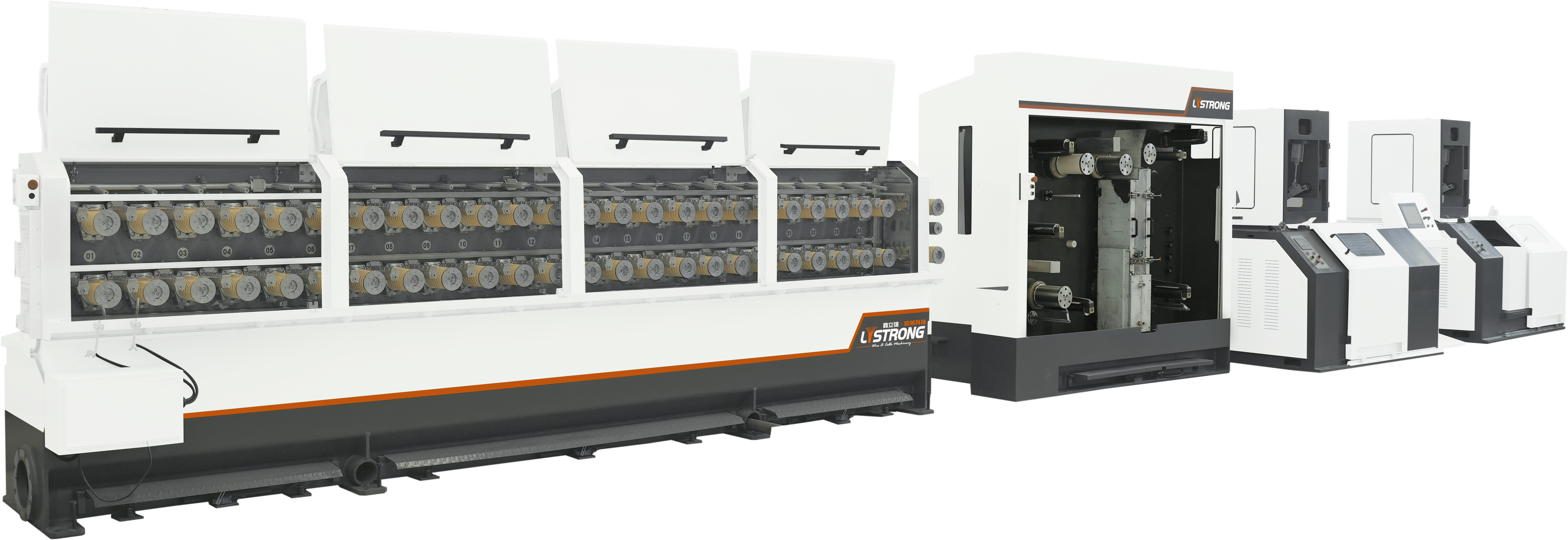
A wire drawing machine is a long-life asset, and the scorecard that selects its supplier should be as durable as the machine. Three gates do most of the work. Identity: the quoting entity, the certificate holder and the warranty issuer should be the same manufacturer, and the ISO 9001 scope should name wire drawing machines, stranding machines and annealing machines. Customization: a real change touches a dimension, an interface or a component — a bobbin machined to customer requirement on the 20-4DT, a die base adjusted to capstan size, a customized spool and shaftless pneumatic take-up on the 24-2DT. Acceptance: a test performed before shipment, performance quoted in measurable terms by wire diameter and elongation, and a warranty start date fixed at dispatch.
Compliance completes the picture rather than replacing it. CE certificate CE-JL26020401-AL-MD, issued by ICG and valid from 2026-02-10 to 2031-02-09 against EN ISO 12100:2010 and EN 60204-1:2018/A1:2025, answers the European market-access question for the models listed on it — and only for those models. Control-part declarations such as OMRON relays and LG switches on 415 V 50 Hz machines make the electrical content inspectable instead of assumed.
Used this way, the scorecard produces a file rather than an opinion: certificate numbers, model coverage, customized dimensions, component lists, lead time, test scope and warranty terms. That file is what protects a project when a quotation is challenged, a shipment is held, or a bobbin arrives that does not fit the take-up. Buyers who want to test the scorecard on a live requirement can send their wire range, speed target, voltage and bobbin specification to Jiangsu Listrong Mechanical & Electrical Co., Ltd. at sale02@xlq-machinery.cn or +86 15261941206 (WhatsApp available), or review the machine range at www.wire-cable-machine.com.
Have Questions or Need More Details?
Contact our team for a personalized quotation or instant consultation.
Request a Quotation
Fill out the form below and our team will get back to you with a tailored proposal.
WhatsApp Direct Chat
Prefer to chat in real-time? Message us on WhatsApp for instant assistance & quick answers.
- Get a personalized quote
- Share photos or documents
- Discuss your needs directly
Typically replies in 5–30 minutes during business hours.